
When Age Becomes an Electrical Concern
Older homes are part of what gives Wilkes-Barre its character. Many properties have decades of history behind the walls, along with electrical systems that were installed when homes had far fewer appliances, electronics, and electrical demands.
That does not mean every older home needs to be completely rewired.
However, an aging electrical system can become a safety concern when the wiring, connections, panels, or grounding no longer meet the needs of the home. In some cases, targeted repairs or upgrades may be enough. In others, replacing outdated wiring throughout part or all of the house is the safer long-term solution.
The key is knowing what type of wiring is in the home, how it has been modified over the years, and what condition it is in today.
How Old Is Too Old for Electrical Wiring
There is no single age at which a house automatically needs rewiring.
A 100-year-old home can have a properly upgraded electrical system, while a much newer home can have damaged, improperly modified, or overloaded wiring.
The home’s electrical history matters more than its age alone.
Homes in older parts of Wilkes-Barre and surrounding NEPA communities may have gone through several renovations and electrical modifications over the decades. An original electrical system may have been partially replaced while other sections remain untouched.
That can create a system where newer wiring, older wiring, updated outlets, and an older service panel all exist together.
Age is a reason to investigate—not automatically a reason to rewire.
Warning Signs That Older Wiring May Need Attention
Certain symptoms deserve more attention than others. If an older home’s electrical system is showing multiple warning signs, an electrical inspection can help determine whether repairs or rewiring are appropriate.
Watch for:
- Frequently tripping circuit breakers
- Flickering or dimming lights
- Outlets or switches that feel warm
- Burning smells around electrical devices
- Buzzing, crackling, or sizzling sounds
- Discolored outlets or switch plates
- Loose or nonfunctional outlets
- Frequent blown fuses
- Extension cords being used as permanent wiring
- Two-prong outlets throughout much of the home
- Lack of adequate grounding
- Visible deterioration of wiring
- Electrical circuits that seem unable to handle modern appliances
One symptom by itself does not necessarily mean the house needs a complete rewiring. Several symptoms occurring togethe
Old Wiring vs. Modern Electrical Demand
One of the biggest differences between an older Wilkes-Barre home and a modern household is how much electricity the home uses.
Decades ago, a typical household may have had relatively few major electrical loads.
Today, one home might simultaneously run:
- Refrigerators and freezers
- Multiple computers and televisions
- Microwaves and other kitchen appliances
- HVAC equipment
- Washer and dryer
- Home office equipment
- Power tools
- Smart home devices
- Electric water heating
- EV charging equipment
The issue isn’t simply that older wiring is “old.”
The question is whether the electrical system was designed, maintained, and upgraded to safely handle the home’s current demand.
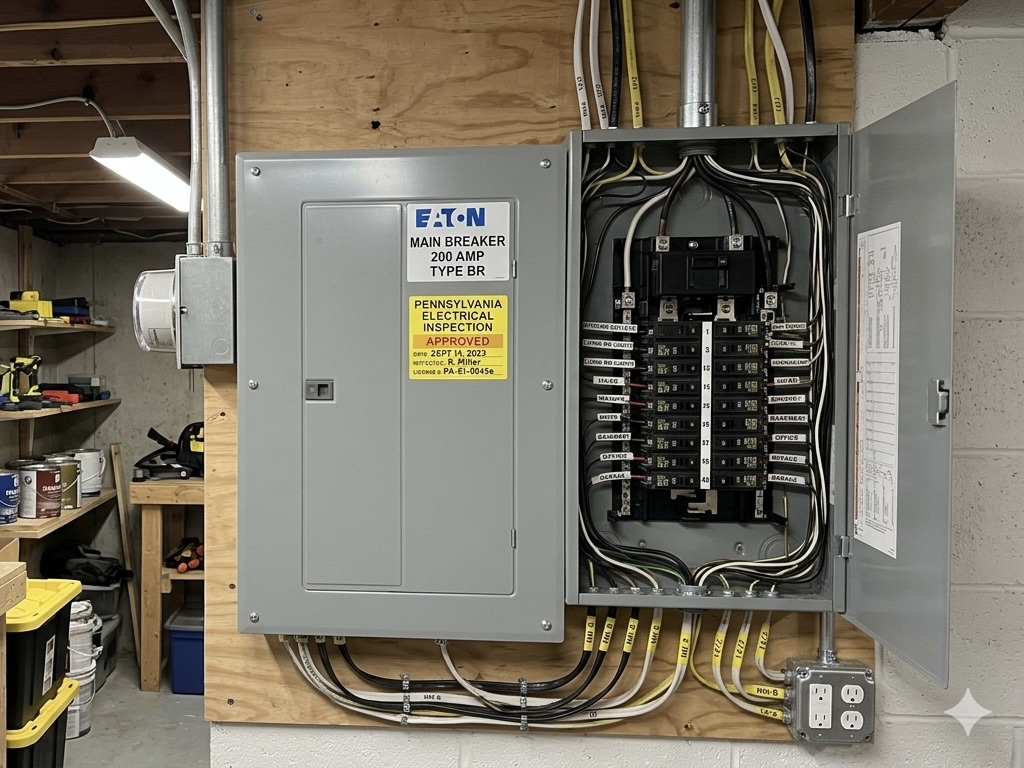
Does an Older Panel Mean the House Needs Rewiring?
Not necessarily.
The electrical panel and the wiring throughout the home are related, but they are not the same thing.
A homeowner might need a panel upgrade without needing to replace every wire in the house. Conversely, a home might have an updated panel while older branch-circuit wiring remains elsewhere.
|
Situation |
What It May Mean |
|
Old panel but wiring is in good condition |
Panel upgrade may be appropriate |
|
Outdated wiring with adequate panel |
Wiring may need attention |
|
Damaged wiring and outdated panel |
Multiple upgrades may be necessary |
|
Frequent breaker trips |
Circuit, load, wiring, or equipment issue should be investigated |
|
Knob-and-tube remains in portions of home |
Professional evaluation is recommended |
|
Recent renovation with newer wiring |
Some areas may already be adequately updated |
This is why replacing a panel should not automatically be treated as a substitute for evaluating the rest of the electrical system.
A Practical Way to Think About It
Think of an older home’s electrical system the same way you might think about its plumbing or roof.
Old does not automatically mean bad.
But age increases the importance of understanding what you’re dealing with.
If the wiring is in good condition, the electrical service is appropriate, circuits are properly configured, and previous modifications were done correctly, an older home may not need a complete rewiring.
If the system contains deteriorated wiring, repeated problems, unsafe modifications, or electrical components that cannot safely support the home’s current needs, rewiring may be the appropriate solution.
For homeowners in Wilkes-Barre, the most useful question isn’t simply “How old is my wiring?”
It’s “Is my electrical system still safe and appropriate for the way my home is being used today?”
That is the question an experienced electrical evaluation should answer.