
The Right Amount of Power
Your home does not necessarily need the biggest electrical service available. It needs an electrical system that can safely and reliably handle the amount of power your household actually uses — including the equipment you have today and the upgrades you are likely to make tomorrow.
For many homeowners in the Wilkes-Barre, Scranton, and broader NEPA area, that question becomes especially important when buying an older home, replacing an electrical panel, adding central air conditioning, installing an EV charger, finishing a basement, or planning a major renovation.
The answer is not simply, “How many appliances do you have?” Electrical demand depends on what those appliances are, how much power they require, and whether they are likely to operate at the same time.
That is why an electrical load calculation is more useful than simply looking at the size of your existing panel.
How Much Power Does a Typical Home Need?
There is no single amperage that is appropriate for every house.
A modest home with gas heating, a gas water heater, standard appliances, and relatively few high-demand electrical devices may have very different requirements from a larger home using electric heat, an electric water heater, a hot tub, multiple HVAC systems, and an EV charger.
For perspective, many modern single-family homes have 200-amp electrical service, but that does not automatically mean every home needs 200 amps, nor does it mean 200 amps will always be sufficient.
The important question is:
What is the calculated electrical load of the home, and what additional demand is expected in the future?
That is the question an electrician should answer before recommending a service upgrade.
What Uses the Most Electricity in a Home?
Lighting and small electronics matter, but some of the biggest electrical loads come from equipment that produces heat or moves large amounts of air or water.
Common high-demand equipment includes:
|
Electrical Load |
Why It Matters |
|
Electric furnace |
Can require substantial continuous electrical power |
|
Heat pump |
Significant demand, particularly during certain operating conditions |
|
Central air conditioning |
Compressor and outdoor equipment add considerable load |
|
Electric water heater |
Heating water requires substantial energy |
|
Electric range/oven |
Heating elements can draw significant current |
|
Clothes dryer |
Heating element creates a relatively large electrical load |
|
EV charger |
Can add a large continuous load to the home’s electrical demand |
|
Hot tub/spa |
Heater and pump loads can be substantial |
|
Pool equipment |
Pumps, heaters, and related equipment can increase demand |
|
Basement workshop equipment |
Larger tools can create additional loads |
A home with several of these systems can have a dramatically different electrical profile than a home with gas appliances and fewer electrically powered systems.
Your Main Panel Is Not the Same Thing as Your Actual Electrical Usage
A common misconception is that a 200-amp panel means a homeowner is using 200 amps.
It doesn’t.
The main breaker rating represents the maximum service capacity of the electrical system under its design conditions. Your actual electrical consumption changes constantly.
At 2 a.m., your home might be using relatively little power.
At 6 p.m. on a winter evening, the situation could be very different.
Imagine a household where the following are operating around the same time:
- Electric cooking appliances
- Electric clothes dryer
- Electric water heater
- HVAC equipment
- Multiple lighting circuits
- Refrigerators and freezers
- Computers and entertainment equipment
- An EV charging
The electrical system has to be evaluated based on the overall demand rather than any single appliance.
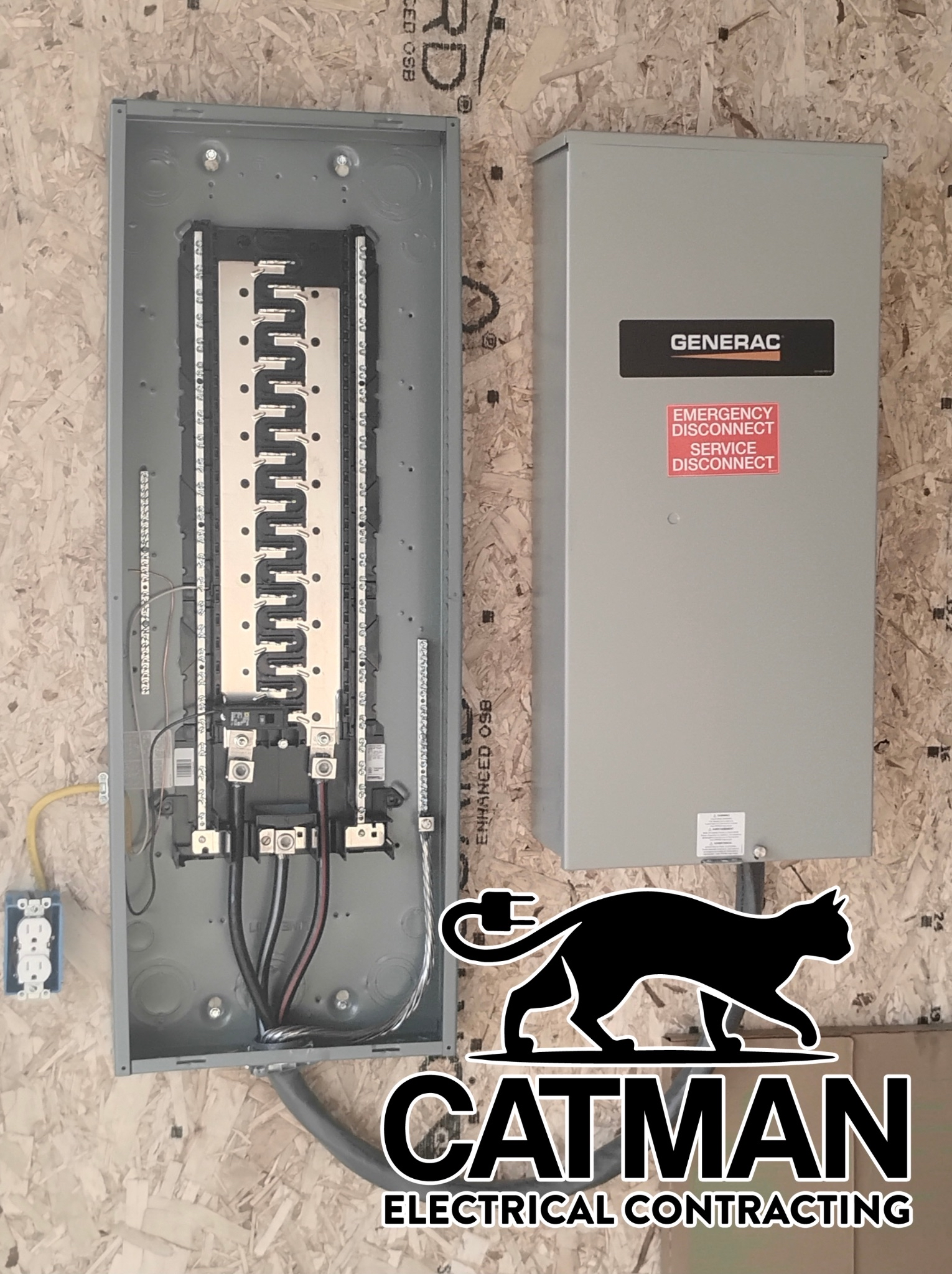
Does a Bigger Panel Mean More Available Power?
Not necessarily.
This is an important distinction when discussing electrical upgrades.
Replacing an old panel with a larger panel does not automatically increase the amount of electricity available to the house.
If a home has a 100-amp service and someone installs a panel with a higher rating without upgrading the service and associated equipment appropriately, the house has not magically gained additional electrical capacity.
The service conductors, meter equipment, disconnecting means, panel, grounding and bonding, and other components all have to work together as a properly rated system.
In other words:
A larger-looking panel is not the same thing as a larger electrical service.
How Much Capacity Should You Plan For?
Homeowners often ask whether they should upgrade electrical service now simply because they might add equipment later.
There is a reasonable middle ground.
You don’t necessarily need to install the largest service available just to prepare for every possible future scenario. But if a major renovation or electrification project is already planned, it makes sense to consider those future loads during the current electrical evaluation.
For example, if you’re remodeling a home today and know that an EV charger and heat pump may be installed in the near future, mentioning those plans during the electrical assessment can help determine whether the system should be designed with those loads in mind.
Good electrical planning looks beyond today’s breaker panel.
A Simple Way to Think About Your Home’s Electrical Needs
Think of electrical capacity like a home’s overall infrastructure.
The question isn’t:
“How many things do I plug in?”
It’s:
“What are the major electrical loads in this home, how do they interact, and what will the system realistically need to support?”
A home with fewer but larger electrical loads can require more capacity than a larger home filled with smaller electronic devices.
That is why counting outlets or looking at the number of breakers isn’t enough.
The Bottom Line
Your home’s electrical needs are determined by more than the number printed on the main breaker.
The right electrical service depends on the home’s size, equipment, heating and cooling systems, appliances, usage patterns, and planned upgrades. In older homes throughout the Wilkes-Barre and Scranton area, those considerations can be particularly important because today’s electrical demands may be very different from what the house was originally designed to support.
If you’re considering an EV charger, electric heating, a major kitchen renovation, new HVAC equipment, or another significant electrical addition, an electrical load evaluation can tell you much more than simply looking at the panel.
The goal isn’t to have the biggest electrical service possible. It’s to have enough properly designed capacity to power your home safely, reliably, and realistically — both today and as your needs change.
For homeowners in NEPA, that’s a much better starting point than guessing at how much power the house really needs.