The One Part of Your Home Most People Never Look At
Most homeowners in NEPA can tell you roughly how old their roof is.
They know when the furnace was replaced. They remember the kitchen remodel. They probably even know which windows still get drafty every winter.
But the electrical panel?
That’s usually a mystery until something starts going wrong.
The trouble is, breaker panels quietly control almost everything modern homes rely on. And across Wilkes-Barre, Scranton, Dallas, Kingston, and surrounding communities, many homes are still operating with electrical panels that were installed decades before today’s power demands existed.
A panel that was perfectly adequate in 1978 may now be trying to support:
- multiple TVs,
- gaming systems,
- garage freezers,
- EV chargers,
- home office setups,
- mini-split systems,
- and modern kitchens full of high-draw appliances.
That strain adds up over time.
And unlike obvious home problems, outdated electrical panels tend to hide their age until they don’t.
What an Electrical Panel Actually Does
Your breaker panel is the distribution center for your home’s electrical system.
Power enters from the utility line, passes through the main breaker, and gets divided into individual circuits throughout the house. Each breaker is designed to protect wiring from overheating by shutting off power when unsafe conditions occur.
At least, that’s the idea.
The problem is older panels weren’t designed around modern living patterns. Homes throughout NEPA have evolved dramatically over the last 40 years, but many electrical systems evolved in patches rather than full upgrades.
A finished basement gets added in the 1990s.
Then central AC.
Then a hot tub.
Then kitchen renovations.
Then an electric vehicle charger.
Eventually the panel becomes the bottleneck.
Sometimes the Warning Signs Are Subtle
Most outdated panels don’t fail dramatically overnight.
The system usually gives smaller warnings first.
Things homeowners often notice:
- breakers tripping more often,
- lights dimming when appliances start,
- buzzing sounds near the panel,
- warm breakers,
- burning smells,
- or circuits that seem overloaded for no clear reason.
In older homes near Pittston or parts of Scranton’s Hill Section, we also regularly see panels that technically still “work,” but have little remaining capacity for modern electrical needs.
That distinction matters.
A functioning panel is not always a safe or future-ready panel.
A Quick Reality Check for Older Homes
If your home was built before the mid-1990s and the electrical panel has never been updated, it’s worth paying closer attention.
Especially if:
- the home has undergone renovations,
- additional appliances were added,
- or you’re relying heavily on extension cords and power strips.
In many NEPA neighborhoods, particularly areas with older split-levels and ranch homes, electrical systems were built around completely different household usage patterns.
A family in 1972 was not running:
- two refrigerators,
- a home office,
- streaming devices,
- portable AC units,
- and garage workshop equipment simultaneously.
Today, that’s normal
Panels That Often Raise Concern
|
Panel Brand |
Common Concern |
|
Federal Pacific (FPE) |
Breakers may fail to trip properly |
|
Zinsco |
Breakers can overheat or lose contact |
|
Pushmatic |
Aging reliability and limited replacement options |
|
Fuse boxes |
Often undersized for modern loads |
This does not automatically mean immediate danger exists in every home with one of these systems.
But these panels deserve careful evaluation, especially in older homes throughout the Wyoming Valley where electrical infrastructure may have been modified repeatedly over decades.
Why Breaker Capacity Matters More Today
One of the biggest shifts in residential electrical systems is load demand.
Years ago, a 100-amp service handled many homes comfortably. Today, that same capacity may struggle depending on how the property is used.
For example:
|
Then |
Now |
|
One window AC unit |
Whole-home cooling systems |
|
Basic kitchen appliances |
Double ovens and induction ranges |
|
One television |
Multiple entertainment systems |
|
Minimal outdoor power use |
Hot tubs, landscape lighting, EV chargers |
This is especially noticeable in homes near Harveys Lake or the Back Mountain where additions, detached garages, and outdoor living upgrades became more common over time.
Electrical demand rarely decreases. It almost always grows.
Why Loose Connections Matter
A loose electrical connection creates resistance.
Resistance creates concentrated heat.
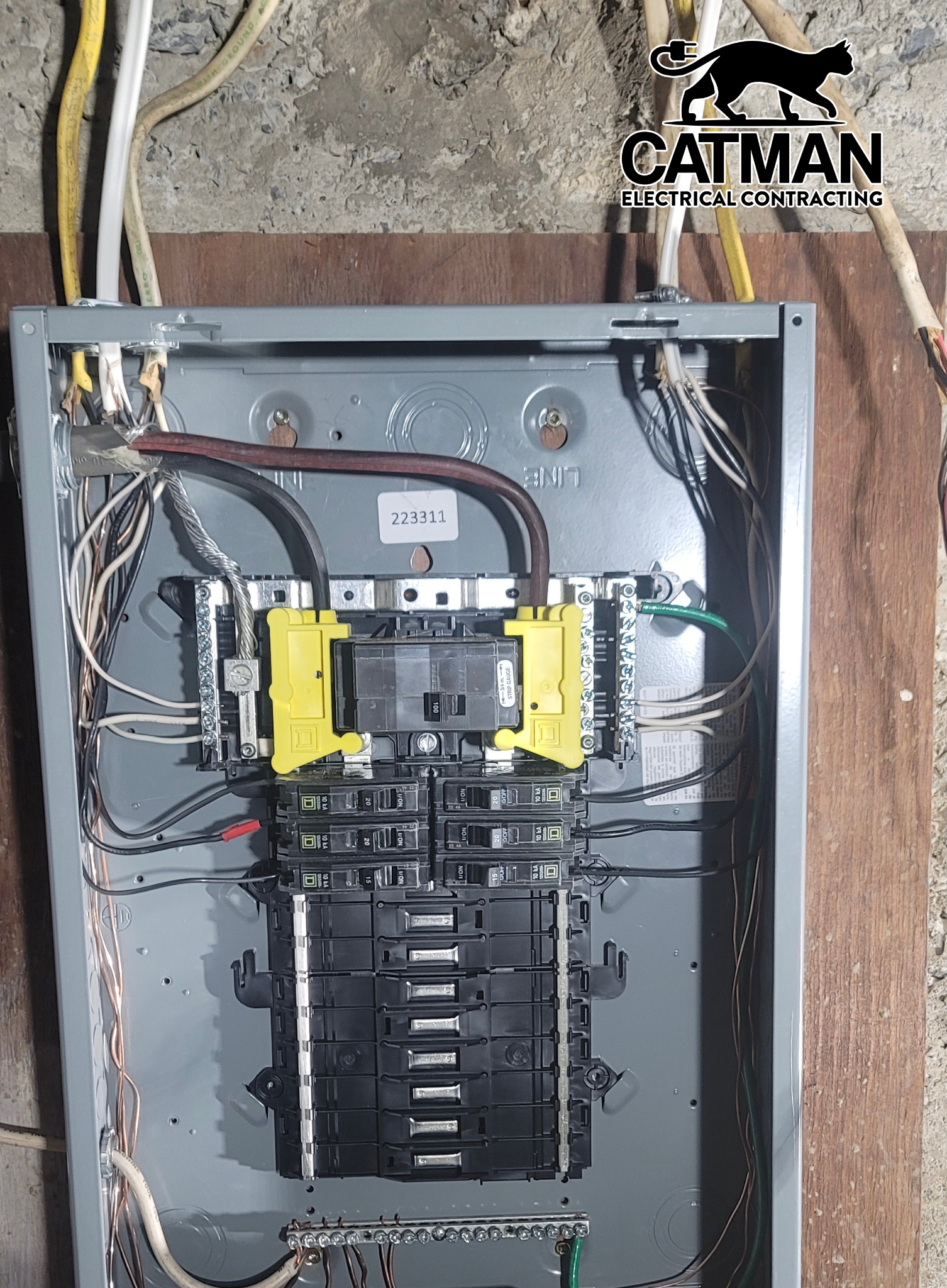
That heat can damage breaker contacts, bus bars, and wire insulation long before visible failure occurs. In some cases, discoloration or scorching develops behind the panel cover where homeowners never see it.
This is one reason electricians pay close attention to:
- hot spots,
- corrosion,
- breaker seating,
- and signs of arcing during inspections.
A panel can appear “fine” from the outside while internal components are steadily deteriorating.
Older NEPA Homes Often Have Layered Electrical History
One thing that makes electrical evaluations tricky in Northeastern Pennsylvania is how many homes have evolved piece by piece over generations.
You might find:
- original wiring in one area,
- a 1980s subpanel addition,
- modern kitchen circuits,
- and older basement wiring all in the same house.
In neighborhoods around Dunmore or older sections of Wilkes-Barre, it’s not unusual to open a panel and discover decades of additions layered together by multiple electricians — and occasionally homeowners themselves.
That doesn’t automatically mean unsafe conditions exist.
But it does mean no two older electrical systems age the same way.
Electrical Panels Age Quietly Until They Don’t
That’s really the challenge with outdated breaker panels.
Unlike a leaking roof or broken furnace, electrical deterioration often stays hidden. Homeowners adapt gradually to minor inconveniences:
- resetting breakers,
- avoiding certain outlets,
- or spacing out appliance usage.
Over time those workarounds start feeling normal.
But electrical systems are supposed to operate quietly, consistently, and without hesitation.
If your panel has become something you actively think about managing, there’s a good chance the system is telling you it may no longer fit the home it’s powering today.