
Older farmhouses across Northeastern Pennsylvania have a rhythm to them. You feel it pulling into a gravel drive off a road outside Dallas or heading back toward Tunkhannock after a long day. These homes were built to last—and they have—but the electrical systems inside them weren’t built for how we live now.
That’s where things start to shift. Not dramatically at first. Maybe it’s a breaker that trips when the microwave and coffee maker run together. Maybe lights dim slightly when the well pump kicks on. Small signs, but consistent ones.
Upgrading electrical in a farmhouse isn’t about replacing everything blindly. It’s about understanding what’s there, what still works, and where the system is quietly falling behind.
What’s Behind the Walls (and Why It Matters Here)
A lot of homes throughout the Back Mountain and surrounding NEPA areas were wired in phases. Original construction, then an addition in the ‘70s, maybe a kitchen update in the ‘90s. Each layer tells a different electrical story.
You’ll commonly see:
- Knob-and-tube wiring still active in attics
- Cloth-insulated conductors that have dried out over time
- Fuse panels that were never meant to handle modern load
- Circuits stretched too far across too many rooms
And then there’s the part people don’t see—how those systems interact.
When older wiring is tied into newer upgrades without a full plan, you end up with imbalance. Some circuits carry far more load than they should, while others sit underused. That uneven demand is what causes most of the “random” issues homeowners notice.
The Panel Isn’t Just a Box — It’s the Limiter
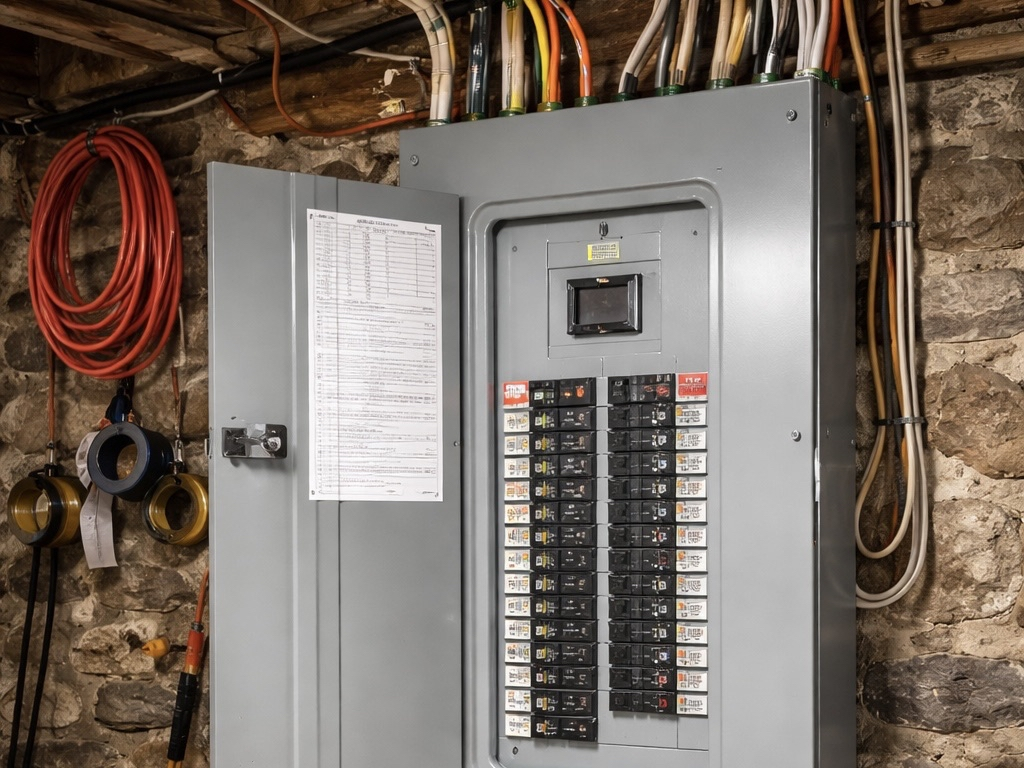
In many NEPA farmhouses, the electrical panel is still operating at 100 amps—or less. That might have worked when the home ran on lights, a stove, and maybe a small heater.
Today? Not even close.
Think about what’s typical now:
- Electric water heaters
- Mini-split systems or updated HVAC
- Kitchen appliances running simultaneously
- Home offices and device charging
- Even EV chargers in more rural properties
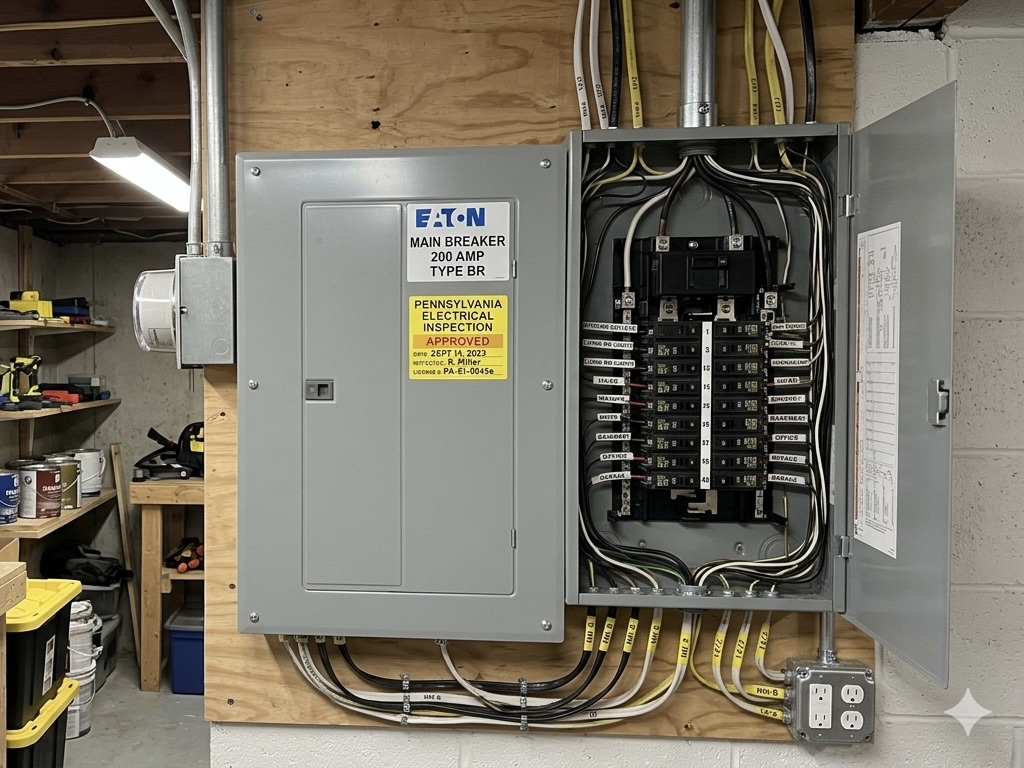
A panel upgrade doesn’t just “add capacity.” It stabilizes how power is distributed across the home. Without it, everything else you add is working against a bottleneck.
A Closer Look: Why Old Circuits Struggle Under Load
Electrical systems are designed around load balancing and conductor limits. Older farmhouses often have circuits rated for 15 amps feeding multiple rooms.
Here’s where it breaks down:
- A modern microwave alone can draw 10–12 amps
- Add lighting and small appliances, and you’re already at capacity
- Voltage drops occur when wiring runs are long (common in farmhouses)
That’s when you start seeing dimming lights or nuisance tripping.
The issue isn’t just “too much plugged in”—it’s that the wiring itself wasn’t designed for simultaneous demand. Upgrading circuits in key areas relieves that stress and brings the system back into a safe operating range.
Rewiring Doesn’t Always Mean Tearing Everything Apart
There’s a common assumption that upgrading an older farmhouse means opening every wall. In reality, a lot of work can be done more strategically.
Where updates tend to matter most:
- Kitchens (dedicated appliance circuits)
- Bathrooms (GFCI protection and proper spacing)
- Laundry areas and basements
- Heating systems and well equipment
Where things can sometimes remain (after inspection):
- Certain lighting circuits
- Areas already updated in recent decades
The goal isn’t to erase the past—it’s to reinforce the parts of the system that carry the most risk.
The “Patchwork” Problem You Don’t See Until You Do
If a farmhouse has been standing for 60–100 years, chances are multiple people have worked on its electrical system.
Not all of it professionally.
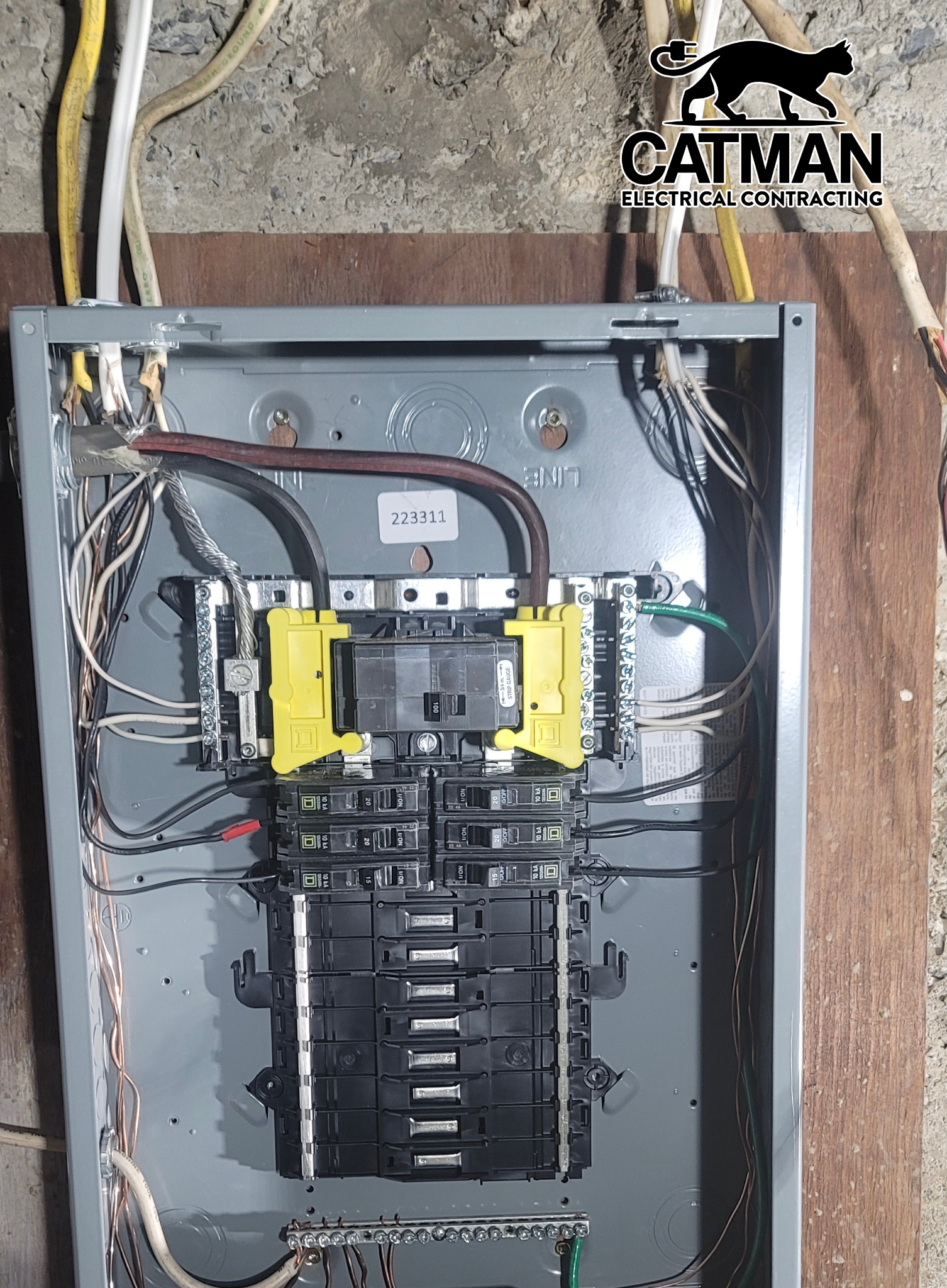
This is where things get unpredictable. You might open one junction box and find three different wire types connected together. Or discover a splice hidden behind a finished wall that was never meant to be permanent.
These aren’t rare situations—they’re common in this area.
Cleaning that up doesn’t just improve safety. It makes the entire system understandable again, which matters for any future work.
A Quick Local Reality Check
Spend a Saturday morning at the Back Mountain Trail or grabbing coffee near Main Street in Kingston, and you’ll hear the same kinds of homeowner conversations:
“Lights flicker when the dryer runs.”
“We can’t run the AC and microwave together.”
These aren’t isolated issues. They’re patterns tied directly to how older electrical systems were built—and how much more we expect from them now.
Grounding, Surges, and the NEPA Weather Factor
Older farmhouses often lack modern grounding systems. That alone creates risk—but in NEPA, weather adds another layer.
Summer storms rolling through the Wyoming Valley can bring sudden voltage spikes. Without proper grounding and surge protection, that energy has nowhere controlled to go.
That affects:
- Appliances
- HVAC systems
- Electronics (even newer ones)
Whole-home surge protection paired with updated grounding quietly protects everything in the background. It’s not something you notice daily—but you’d notice quickly if it wasn’t there.
Straight Answer: Do Older Farmhouses Need Full Rewiring?
Not always.
Most farmhouses in NEPA benefit more from a targeted upgrade approach:
- Replace outdated panels
- Rewire high-demand areas
- Correct unsafe or unknown modifications
- Add grounding and surge protection
Full rewiring is usually reserved for homes where the existing system is too deteriorated or inconsistent to safely build on.
The key is evaluation—not assumption.
Keeping the Character, Fixing the Core
One concern comes up often: “Is this going to change how the house feels?”
It doesn’t have to.
Most upgrades today are done with minimal disruption:
- Routing through basements and attics
- Preserving plaster and original finishes
- Matching fixtures to the home’s style
From the outside—and even most of the inside—the home stays the same.
Behind the walls, though, everything works the way it should.
Where This Really Lands
Upgrading electrical in a farmhouse around NEPA isn’t about chasing trends or overbuilding. It’s about aligning an older structure with how people actually live now.
Whether it’s a place that’s been in the family for generations or a recent move out toward quieter roads, the expectation is the same:
You flip a switch, plug something in, turn on the heat after a cold day—and it just works.
That’s the difference a properly upgraded system makes.