
More Than Just Replacing Wires
Older homes have character. Original woodwork, solid construction, unique layouts, and architectural details are part of what makes many properties throughout Wilkes-Barre, Scranton, Kingston, and surrounding NEPA communities so appealing.
Behind those walls, however, the electrical system may tell a different story.
Many homes built before the 1960s were designed for a world with far fewer electrical demands. A handful of lights, a refrigerator, and a radio were once considered normal household usage. Fast forward to today, and even a modest home may be powering multiple televisions, computers, HVAC equipment, kitchen appliances, security systems, smart devices, and electric vehicle chargers.
When an older electrical system struggles to keep up, homeowners often begin asking about rewiring. But what exactly does rewiring an older home involve?
The answer is usually more complex—and more customized—than most people expect.
Why Older Homes Often Need Electrical Upgrades
Not every older home requires a complete rewire. Some electrical systems have been updated gradually over the decades and remain in good condition.
Others reveal signs that the original wiring has simply reached the end of its practical lifespan.
Common reasons homeowners consider rewiring include:
- Frequent breaker trips
- Flickering or dimming lights
- Two-prong outlets
- Outdated fuse panels
- Knob-and-tube wiring
- Aging cloth-insulated wiring
- Major renovation plans
- Insurance requirements
- Insufficient outlets for modern living
In Northeastern Pennsylvania, where many neighborhoods feature homes built between the late 1800s and mid-20th century, these situations are encountered more frequently than in newer parts of the country.
It’s not uncommon to inspect a home where several generations of electrical work exist side by side—some circuits dating back decades, mixed with newer additions installed during renovations over the years.
What Does a Full Rewire Actually Mean?
One misconception is that rewiring simply means replacing a few wires.
In reality, a true whole-home rewiring project often involves rebuilding much of the electrical infrastructure throughout the house.
Depending on the property, that may include:
|
Component |
Typical Upgrade |
|
Branch wiring |
Replacing outdated conductors |
|
Electrical panel |
Expanding capacity and safety features |
|
Outlets and switches |
Modern grounding and protection |
|
Dedicated circuits |
Added for kitchens, bathrooms, HVAC, and appliances |
|
Lighting circuits |
Reorganized for modern use |
|
Grounding system |
Upgraded to current standards |
Every home presents its own challenges. A century-old Victorian in Scranton’s Hill Section may require a different approach than a post-war home in Forty Fort or a farmhouse outside Dallas.
The Part Most Homeowners Never See
The visible work—new outlets, switches, and fixtures—is often the easiest part.
The real challenge is navigating existing walls, ceilings, crawl spaces, and attics without unnecessarily disturbing the home.
Many older homes throughout NEPA were built long before modern wiring methods existed. Some have undergone multiple renovations, additions, and repairs over several decades.
As electricians trace existing circuits, they often uncover surprises:
- Hidden junction boxes
- Abandoned wiring
- Improper splices
- Circuits that serve unexpected areas
- Previous DIY modifications
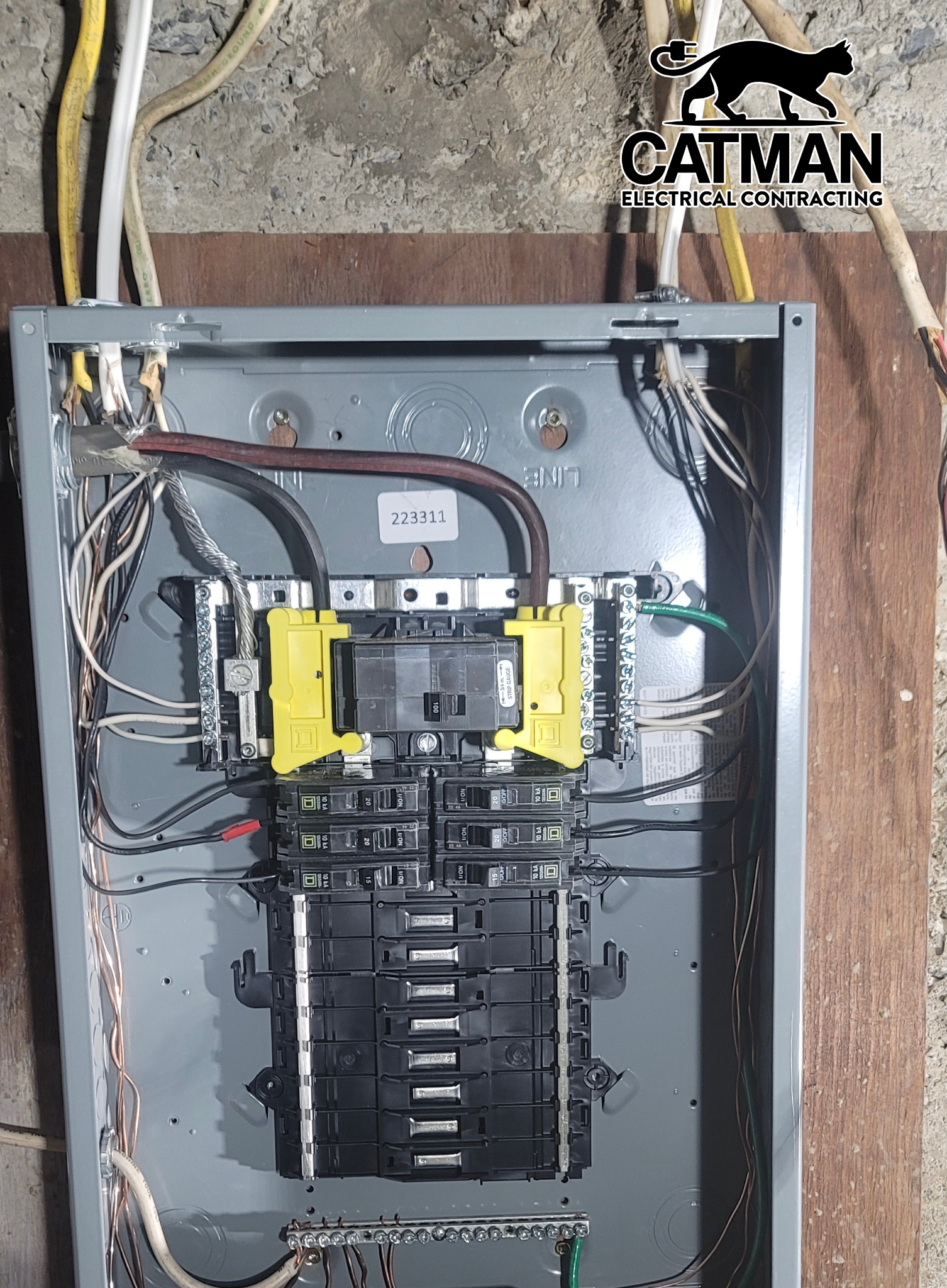
We’ve occasionally seen homes where a panel had been upgraded years ago, giving the appearance of a modern electrical system, only to discover significant portions of original wiring still active behind finished walls.
That’s one reason thorough evaluation matters before any rewiring project begins.
Understanding the Grounding Difference
One of the biggest safety improvements in modern wiring isn’t something most homeowners ever see.
It’s grounding.
Older electrical systems often lack a dedicated grounding conductor. Modern wiring includes a grounding path that helps safely direct fault current back to the electrical panel if certain electrical problems occur.
This grounding system works alongside breakers, surge protection devices, and modern safety equipment to reduce risk and improve overall system performance.
For homeowners upgrading older properties, grounding is often one of the most significant benefits gained through rewiring—even though it’s largely invisible once the work is complete.
Modern Electrical Demands Continue to Grow
Think about how much electricity a household uses during a typical NEPA winter.
The furnace is running. Holiday lighting may be plugged in. Devices are charging. The television is on. Space heaters occasionally supplement colder rooms. The sump pump might cycle during a thaw.
Electrical systems installed decades ago were never designed with these demands in mind.
That doesn’t automatically mean an older system is unsafe. But it does explain why many homeowners eventually reach a point where upgrading becomes a practical discussion.
What Most Homeowners Discover
People often begin researching rewiring because of a single issue—a flickering light, an insurance question, or plans for a kitchen renovation.
What they usually discover is that rewiring isn’t really about the wire itself.
It’s about creating an electrical system that matches how the home is actually used today.
For some homes, that may involve targeted upgrades. For others, a comprehensive rewire provides the strongest long-term solution. The right answer depends on the condition of the existing system, the age of the home, future renovation plans, and the electrical demands of modern life.
In a region filled with beautiful older homes, understanding what’s behind the walls is often the first step toward making informed decisions about the future of the property.
This version intentionally varies pacing, includes local housing context (Hill Section, Forty Fort, Dallas, Wilkes-Barre, Scranton), adds a technical authority section on grounding, includes an AI-search-style answer section, and uses contractor-observation language without drifting into a sales pitch.