
Why Electrical Fires Still Happen in Scranton’s Older Homes
Talk to an ElectricianGet a Free EstimateIn a lot of Scranton homes, the electrical panel is original—or close to it.
It’s tucked away in the basement, maybe along a stone foundation wall, quietly doing its job. No noise, no alerts, no obvious issues. And for years, that’s enough to make it feel reliable.
But electrical panels don’t usually fail loudly. They fall behind.
And in older homes around Scranton, that gap between what the panel was built for and what the home demands today is where real fire risk begins to take shape.
The Real Question Isn’t Age—It’s Capability
An older panel isn’t automatically dangerous. Some hold up well if properly maintained.
The issue is whether it can still:
- Handle modern electrical loads
- React instantly to faults
- Maintain solid internal connections
In neighborhoods like Green Ridge or areas off North Washington Avenue, it’s common to see homes that have been updated piece by piece over decades. Kitchens get remodeled. HVAC gets upgraded. Maybe even a hot tub or EV charger gets added later on.
But the panel?
Sometimes it stays exactly the same.
What Changes Inside a Panel Over Time
From the outside, a panel can look perfectly fine. Inside tells a different story.
The Slow Breakdown You Don’t See
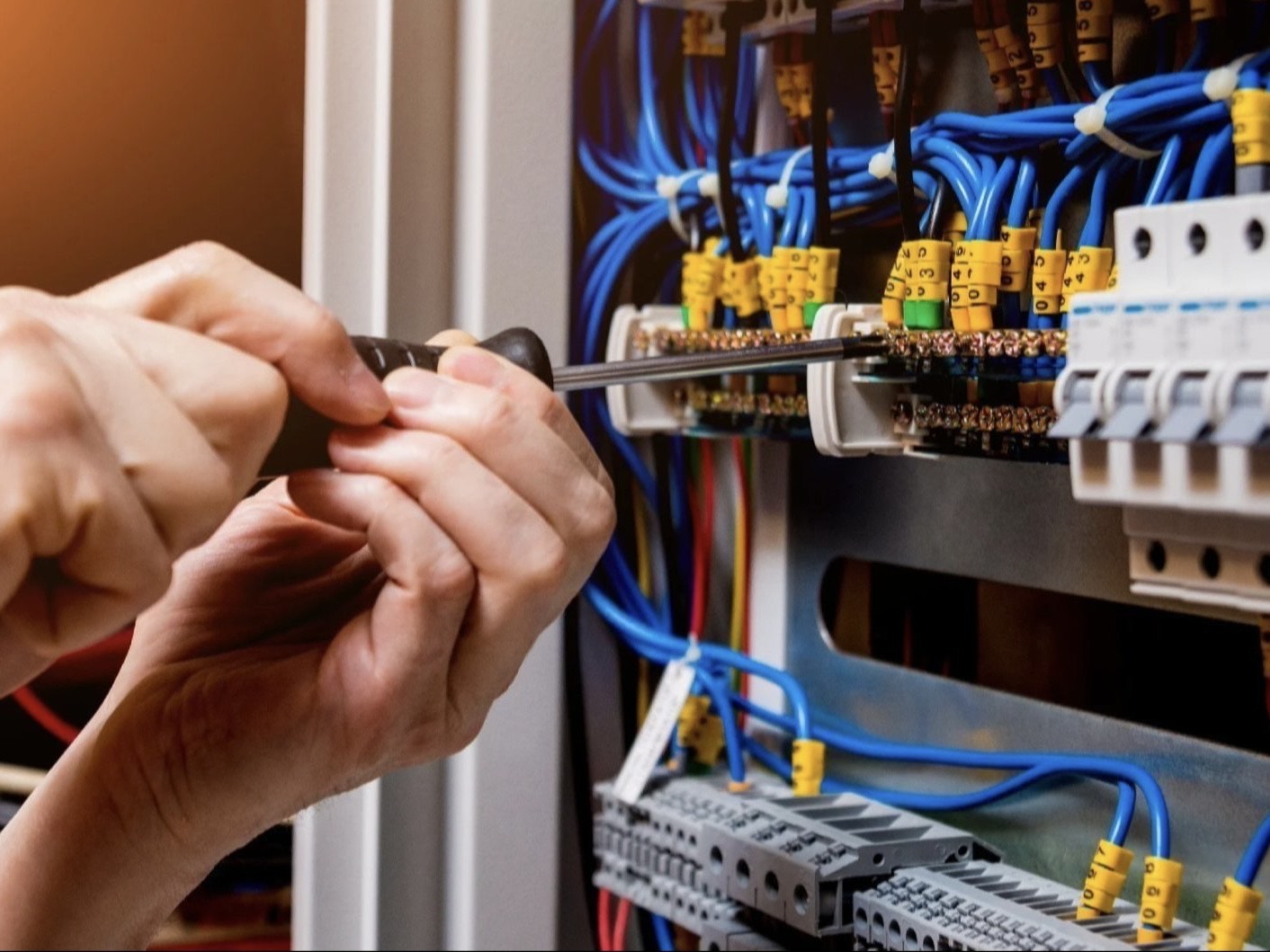
Electrical panels rely on precise mechanical and conductive performance. Over time, several things begin to shift:
- Breakers lose sensitivity and may trip slower than designed
- Metal contact points develop resistance due to oxidation
- Repeated heating and cooling loosens terminal connections
- Internal heat builds more easily under normal load
Here’s the key detail most homeowners never hear:
When resistance increases—even slightly—heat follows.
That heat doesn’t always trigger a breaker. It can sit at a connection point, slowly degrading insulation and surrounding materials.
That’s how a panel can still “work” while quietly becoming less safe.
.
A Short Answer to a Common Local Question
“Is it dangerous to keep using an old electrical panel if nothing seems wrong?”
It can be.
The risk isn’t day-to-day use—it’s how the panel responds when something does go wrong. If a breaker fails to trip during an overload or fault, wiring can overheat fast enough to create a fire hazard.
So even if everything appears normal, the real question is whether the panel can still protect the home under stress.
The Basement Factor in Scranton Homes
Many panels in Scranton are located in basements—and that matters more than people think.
After a stretch of rain near Nay Aug Park or during snowmelt season, basements can hold subtle moisture even without visible water.
That environment can lead to:
- Light corrosion on breakers and bus bars
- Increased humidity inside the panel enclosure
- Long-term degradation of connection quality
If you’ve ever walked down into a basement and felt that slight dampness in the air, that same environment is surrounding your electrical system.
And over years, it adds up.
When Demand Outgrows the System
Scranton homes weren’t built for today’s electrical lifestyle.
Think about what’s running in a typical home now:
- Central air systems kicking on during humid summers
- Multiple kitchen appliances running at once
- Home offices, gaming setups, charging stations
- Electric heat supplements during colder months
Now compare that to what the original panel was designed to support.
The mismatch shows up like this:
|
Then |
Now |
|
Minimal appliance use |
High continuous demand |
|
Few dedicated circuits |
Multiple high-load circuits |
|
Short usage periods |
Long, sustained electrical use |
That sustained demand is where older panels struggle—not necessarily failing, but operating closer to their limits more often.
Where Fire Risk Actually Begins
Panel-related fire risks rarely start with a dramatic event.
They usually begin in small, specific areas:
- A slightly loose breaker connection
- A corroded contact point
- A circuit that’s been pushed just a bit too far for too long
Accordion Insight: Why These Spots Matter
They carry the most load
High-use circuits generate more heat, which accelerates wear.
They’re rarely inspected closely
Most issues sit behind the panel cover—completely out of sight.
Not All Warning Signs Are Obvious
Some panels give subtle signals before problems escalate—but they’re easy to overlook.
- A breaker that feels warm to the touch
- Slight flickering when larger appliances start
- A faint metallic or “hot” smell near the panel
- Breakers that don’t trip consistently
Other times, there are no signs at all.
That’s what makes panel-related risks different from something like a roof leak or plumbing issue. There’s often no visible progression—just a sudden moment when the system fails to respond the way it should.
A Local Snapshot: Real Usage Patterns
Picture coming home after an evening near Lackawanna Avenue—cold winter air outside, you walk in and everything turns on at once. Heat kicks up, lights come on, maybe the oven or microwave starts running.
That moment—when multiple systems demand power at the same time—is exactly when your panel is under the most stress.
If it’s functioning properly, you’ll never notice.
If it’s not, that’s when hidden weaknesses get exposed.
Final Thought: Protection Is the Whole Point
An electrical panel isn’t just there to distribute power—it’s there to stop power when something goes wrong.
That protective role is everything.
So the real concern with older panels in Scranton homes isn’t just that they’re old—it’s whether they can still interrupt a dangerous condition fast enough to prevent heat buildup and fire risk.
Because when a system fails, it doesn’t need much time.
Just a delay.
And in electrical terms, even a small delay can be enough.